
In today’s fast-paced business environment, managing data efficiently can make or break a company. Enter TransDS—a powerful solution designed to streamline the way organizations handle their data. Whether you’re juggling multiple sources of information or trying to maintain accuracy across various platforms, understanding TransDS is essential. This innovative approach not only simplifies complex processes but also enhances overall productivity. Let’s dive into what makes TransDS a game-changer for businesses looking to harness their data effectively and stay ahead in the competitive landscape.
What is TransDS?
TransDS, short for Transactional Data Services, is an advanced framework designed to optimize data management. It allows businesses to integrate, transform, and synchronize their data seamlessly across various platforms.
At its core, TransDS focuses on ensuring that information flows smoothly between different systems. This capability is crucial for organizations that rely on diverse data sources and need a unified view of their operations.
In a world where accurate and timely information is key to decision-making, TransDS provides the tools necessary for effective data handling. By leveraging this approach, companies can enhance their operational efficiency while minimizing errors associated with manual processes.
With its emphasis on transactional integrity and real-time access, TransDS stands out as a vital component in modern business strategies aimed at maximizing performance through better data utilization.
How does TransDS work?
TransDS operates by leveraging advanced algorithms and protocols to facilitate seamless data management. It starts with the extraction of raw data from various sources, whether internal databases or external applications.
Once extracted, this data undergoes meticulous transformation. The process includes cleaning, normalizing, and structuring the information to suit business needs. This ensures that businesses work with high-quality data ready for analysis.
Next comes synchronization. TransDS continuously updates all connected systems in real-time. This means any changes made in one system are instantly reflected across others.
Integration is another vital component of how TransDS works. It bridges disparate platforms, allowing them to communicate effortlessly. With these layers working together harmoniously, organizations can harness their data’s full potential without hassle or delay.
Key Concepts of TransDS:
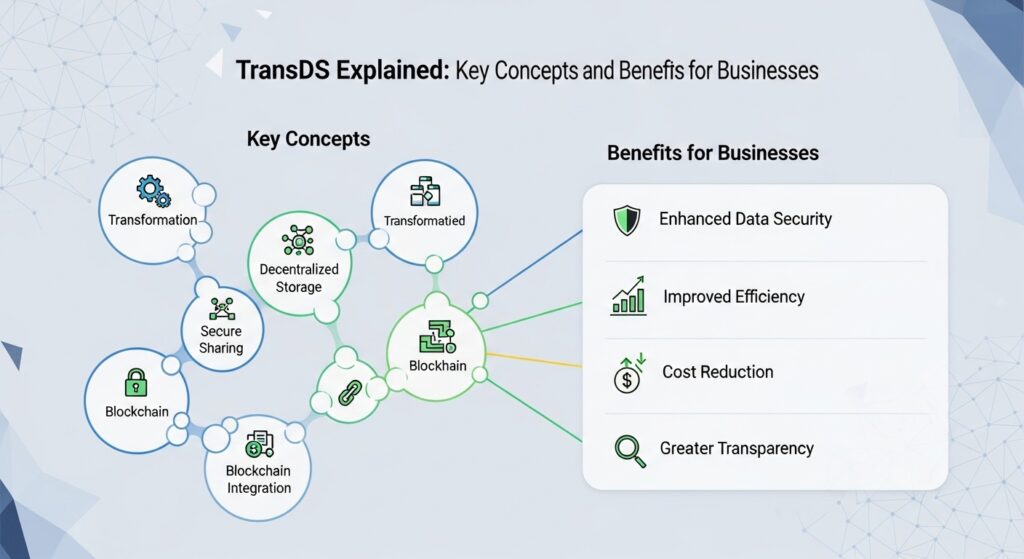
TransDS revolves around three core concepts that shape its functionality: data integration, data transformation, and data synchronization.
Data integration focuses on combining various sources of information into a unified system. This process ensures all relevant data is accessible in one place, facilitating easier analysis.
Next comes data transformation. This concept involves converting raw data into a usable format. It can include cleansing, enriching, or formatting the information to meet specific business needs.
There’s data synchronization. This refers to keeping different datasets updated and consistent across platforms. With real-time syncing capabilities, businesses can maintain accurate records automatically without manual intervention.
Together, these key concepts provide the foundation for TransDS’s effectiveness in managing complex datasets seamlessly.
A. Data Integration
Data integration is the cornerstone of TransDS. It involves combining data from various sources into a unified view. This process helps businesses create a centralized repository for their information.
When different systems collect data, discrepancies often arise. Data integration allows organizations to harmonize these differences seamlessly. By doing so, they ensure that all departments work with consistent and accurate data.
Moreover, effective data integration fosters collaboration among teams. When everyone has access to the same information, decision-making becomes more efficient and aligned with company goals.
With modern tools and technologies, integrating diverse datasets has become easier than ever. Companies can leverage APIs and cloud services to streamline this process without extensive manual effort.
Strong data integration lays the foundation for deeper insights while enhancing operational agility within an organization.
B. Data Transformation
Data transformation is a critical step in the TransDS process. It involves converting raw data into a format that serves specific business needs. This ensures that information is not only usable but also relevant.
During this phase, data may be cleansed, aggregated, or enriched. These actions enhance its quality and usefulness for decision-making purposes. By standardizing formats and removing inconsistencies, businesses can trust their insights more.
Moreover, effective data transformation allows companies to integrate diverse datasets from various sources seamlessly. The result? A comprehensive view of operations that drives smarter strategies and solutions.
Efficient data transformation paves the way for better analytics capabilities—enabling organizations to harness the power of their information like never before.
C. Data Synchronization
Data synchronization is a critical aspect of TransDS that ensures consistency across multiple data sources. It involves aligning and updating information so that the same data reflects correctly in different systems.
With effective data synchronization, businesses can maintain accurate records without manual intervention. This automation reduces errors and saves valuable time.
Moreover, real-time synchronization allows companies to make informed decisions based on the most current information available. Whether it’s customer details or inventory levels, having synchronized data improves operational efficiency.
Additionally, this process enhances collaboration among teams. When everyone accesses the same updated information, communication flows more smoothly and projects progress faster.
Efficient data synchronization lays the groundwork for improved analytics and insights within organizations.
Benefits of TransDS for Businesses:
TransDS offers a range of benefits that can significantly enhance business operations. One major advantage is increased efficiency and productivity. By streamlining data processes, teams can focus more on strategic tasks rather than getting bogged down in manual data handling.
Improved accuracy and quality of data are also critical advantages. With TransDS, businesses reduce errors associated with human input. This leads to better decision-making based on reliable information.
Cost savings play an essential role too. Automating various aspects of data management lowers operational costs and increases return on investment (ROI). When resources are allocated wisely, organizations can see substantial growth over time.
Additionally, the flexibility of TransDS allows businesses to adapt quickly to market changes or technological advancements without significant disruptions. This agility provides a competitive edge that’s invaluable in today’s fast-paced environment.
A. Increased Efficiency and Productivity
TransDS plays a pivotal role in enhancing business efficiency. By automating data processes, it reduces the time spent on manual tasks. This streamlining allows teams to focus on more strategic initiatives.
With seamless integration of various data sources, employees can access real-time information effortlessly. Decisions are made quicker and with greater confidence as relevant insights become readily available.
Moreover, TransDS minimizes errors associated with data handling. Fewer mistakes mean less time is wasted fixing issues and ensures smoother operations across departments.
When businesses operate efficiently, productivity naturally follows suit. Teams can accomplish more within shorter time frames, driving overall growth and innovation. The ripple effect of increased efficiency leads to higher employee satisfaction too, as they experience less frustration from clunky systems and processes.
B. Improved Data Accuracy and Quality
When it comes to data management, accuracy is paramount. TransDS enhances the precision of your data by minimizing errors during processing and integration. This means that businesses can rely on consistent information for decision-making.
With robust validation techniques, TransDS ensures only high-quality data enters your systems. It filters out inaccuracies and duplicates before they become a problem. As a result, teams spend less time correcting mistakes.
Moreover, improved data quality leads to better insights. When you have reliable information at your fingertips, strategic planning becomes more effective and informed. Teams can trust their analytics without second-guessing the underlying figures.
Investing in TransDS also boosts stakeholder confidence. Accurate reports foster transparency, which builds stronger relationships with clients and partners alike. Striving for excellence in data integrity pays off significantly across various business functions.
C. Cost Savings and ROI
Implementing TransDS can significantly reduce operational costs for businesses. With its ability to streamline data processes, organizations can minimize resource wastage and improve overall efficiency.
By automating tasks that were once manual, companies save on labor costs and allocate their workforce more effectively. This shift not only enhances productivity but also allows employees to focus on higher-value activities.
Moreover, accurate data integration leads to better decision-making. When teams have access to reliable information in real-time, they can pivot strategies quickly without incurring additional expenses related to delays or errors.
As a result, the return on investment (ROI) becomes evident. Businesses experience quicker payback periods from technology investments when leveraging TransDS’s capabilities. This financial advantage fosters growth and paves the way for further innovations within the organization.
Real-Life Examples of Successful Implementation of TransDS
Many businesses have successfully harnessed the power of TransDS to streamline their operations. For instance, a leading e-commerce platform implemented TransDS to integrate data from various sources. This integration enabled them to offer personalized recommendations based on user behavior and preferences.
In the healthcare sector, a hospital network adopted TransDS for patient record management. By transforming and synchronizing patient data across different facilities, they improved care coordination and reduced medical errors.
A financial services company also saw significant improvements after implementing TransDS. They used it to combine data from multiple systems, enhancing reporting accuracy while speeding up compliance processes.
These diverse examples showcase how versatile and impactful TransDS can be across various industries. Each case highlights its ability to drive efficiency and better decision-making through effective data management strategies.
Challenges and Limitations of TransDS
TransDS, while powerful, does come with its own set of challenges. One significant hurdle is the complexity involved in implementation. Businesses often struggle to integrate existing systems seamlessly with TransDS.
Data security is another concern. Handling sensitive information requires stringent protocols. Without proper safeguards, organizations may expose themselves to potential breaches.
Scalability can also pose issues as businesses grow and evolve. Adapting TransDS for larger datasets or more complex workflows might demand additional resources and expertise.
Additionally, training staff on new technologies presents a challenge. Employees must be equipped to handle transitions smoothly; otherwise, productivity may suffer during the adjustment period.
Ongoing maintenance can be resource-intensive. Regular updates and troubleshooting are necessary to ensure optimal performance over time.
Conclusion
TransDS is paving the way for businesses to optimize their data management processes. By providing a comprehensive framework that encompasses data integration, transformation, and synchronization, it addresses critical challenges while unlocking new opportunities for growth.
The benefits are clear. Increased efficiency translates into higher productivity levels. Improved accuracy means better decision-making capabilities based on reliable information. And let’s not overlook cost savings—an essential factor in today’s competitive landscape.
Real-life examples demonstrate how various organizations have successfully embraced TransDS to transform their operations and achieve remarkable results. Yet, like any technology, it comes with its own set of challenges that require careful consideration.
Adopting TransDS can truly reshape how businesses handle their data assets, leading to significant advancements and improved outcomes across multiple sectors. Whether you’re just starting out or looking to refine your existing systems, exploring this innovative solution might be right for you.