
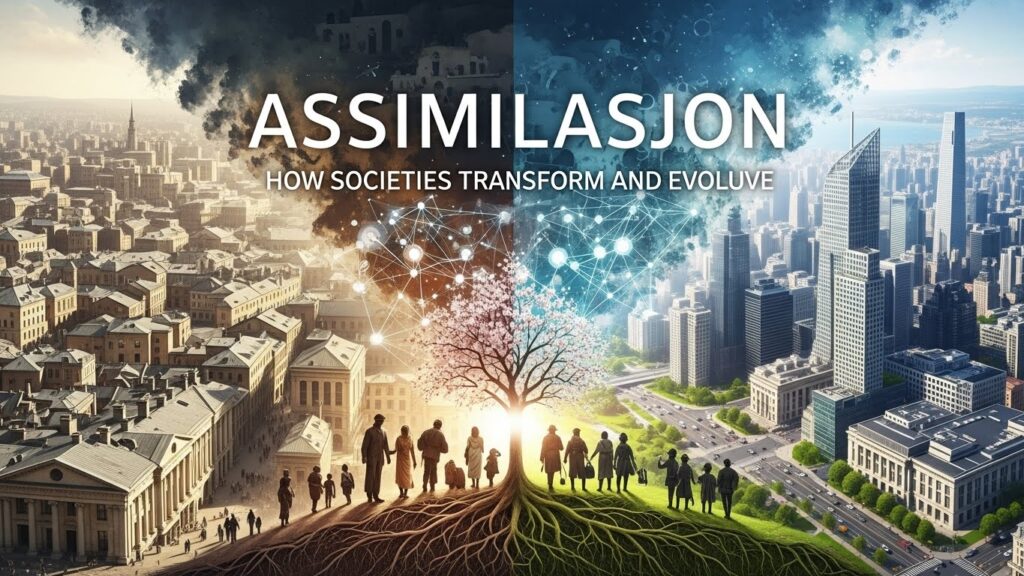
Assimilasjon is a complex process that shapes societies in profound ways. It involves the blending of cultures, ideas, and practices, often leading to significant transformations within communities. As different groups come together, they share their customs and beliefs—creating a rich tapestry of human experience. But what does this really mean for individuals and society as a whole? In exploring assimilation, we uncover not only its historical roots but also the intricate dynamics at play today. This journey reveals both the beauty and challenges that arise when cultures collide or converge. Join us as we delve into how societies evolve through assimilation while navigating its multifaceted implications on identity and cultural heritage.
Understanding Assimilation
Assimilasjon is the process by which individuals or groups adopt the customs and practices of another culture, often leading to a blending of identities. It occurs in various contexts—whether through migration, colonization, or globalization.
At its core, assimilation can be voluntary or forced. Some embrace new cultures out of curiosity and desire for belonging. Others may feel pressure to conform due to societal expectations.
This transformation impacts language, traditions, and social norms. As people assimilate, they might adopt new values while leaving behind aspects of their original identity.
Understanding this dynamic requires recognizing both personal experiences and broader societal influences. It’s essential to explore how power relations shape these interactions and determine who gets to define cultural norms.
The nuances of assimilation highlight its complexity as societies navigate change while grappling with issues related to acceptance and integration.
Historical Examples of Assimilation
Throughout history, assimilation has shaped nations and cultures in significant ways. One notable example is the Roman Empire. As it expanded, Rome integrated various peoples and traditions into its own fabric. Conquered societies often adopted Roman customs, language, and governance.
Another compelling instance can be seen in the United States during the 19th century. Immigrants from Europe faced pressure to assimilate into American culture. Many adopted English as their primary language while leaving behind their native tongues.
In Australia, the policy of “White Australia” sought to assimilate Indigenous populations through forced removals and cultural suppression. This tragic chapter highlights the darker side of assimilation efforts.
The Meiji Restoration in Japan marked a different approach to assimilation as Japan opened itself up to Western influences while preserving traditional elements of its society. Each example underscores how complex and multifaceted assimilation can be across different contexts.
The Positive and Negative Effects of Assimilation
Assimilasjon can bring about significant benefits for communities. It often leads to increased social cohesion, where diverse groups find common ground. This unity can foster collaboration and shared goals, enhancing community development.
However, the process is not without its drawbacks. Cultural erasure is a pressing concern. As dominant cultures absorb minority groups, unique traditions and languages may vanish over time.
In economic contexts, assimilation might lead to improved opportunities for individuals from marginalized backgrounds. They gain access to better jobs and education through integration into mainstream society.
On the flip side, this shift can create tension among those who feel their identities are being threatened or diminished. The struggle between embracing new values while holding onto one’s heritage becomes a delicate balance that many face during assimilation.
Understanding these complexities helps navigate the multifaceted landscape of cultural transformation in societies today.
Challenges Faced by Societies during the Process of Assimilation
Assimilasjon presents significant challenges for societies navigating change. One major hurdle is resistance from both the assimilating and host cultures. Individuals often cling to their traditions, fearing loss of identity.
Communication barriers can also complicate integration efforts. Language differences may hinder understanding, creating tension between groups. Misunderstandings arise easily in such environments.
Moreover, economic disparities frequently surface as a challenge during assimilation. Access to resources varies greatly among communities, leading to feelings of inequality and resentment.
Social cohesion can suffer when people feel marginalized or excluded from mainstream culture. This division fosters an environment ripe for conflict rather than unity.
Political structures might struggle to adapt policies that accommodate diverse populations effectively. This lack of support exacerbates existing tensions within the society as everyone seeks a sense of belonging while grappling with change.
How Assimilation Can Lead to Cultural Exchange and Growth
Assimilasjon often unfolds in vibrant ways, sparking cultural exchange that enriches communities. When diverse groups come together, they share customs, languages, and traditions. This interaction can lead to innovative art forms or culinary fusions that reflect a blend of influences.
As people interact, new ideas emerge. These exchanges foster creativity and can drive societal growth. For example, music styles may merge to create fresh genres resonating with broader audiences.
Language also evolves through assimilation. Words from one culture might find their way into another’s vernacular, creating a dynamic linguistic landscape.
This sharing is not merely about blending; it’s an invitation for understanding and empathy between cultures. By engaging with different perspectives, societies become more adaptable and resilient in the face of change.
The Importance of Preserving One’s Cultural Identity
Cultural identity serves as a bridge connecting individuals to their roots. It shapes our beliefs, values, and traditions. When we embrace our heritage, we honor the struggles and triumphs of those who came before us.
Preserving cultural identity fosters community cohesion. It encourages shared experiences that deepen relationships among people. These connections are vital in an increasingly globalized world where unique voices can easily be overshadowed.
Moreover, maintaining one’s cultural practices enriches society as a whole. Diverse perspectives promote creativity and innovation. They inspire fresh ideas while allowing for meaningful dialogues between different cultures.
By valuing our unique backgrounds, we cultivate a sense of pride and belonging. This not only empowers individuals but also strengthens communities against the tide of conformity often seen in modern societies. Every culture contributes to the tapestry of human existence; preserving each thread is essential for future generations.
Conclusion
Assimilasjon, or assimilation, is a complex and multifaceted process that societies undergo as they evolve. It can bring about significant changes in cultural dynamics while also posing unique challenges.
As we explore the historical examples of assimilation, it becomes evident how societies have transformed over time through this process. From the merging of indigenous cultures with colonizers to the blending of immigrant traditions into local customs, each instance showcases both resilience and adaptation.
The effects of assimilation are varied. On one hand, it can foster unity and shared identity among diverse groups; on the other hand, it may lead to the erosion of distinct cultural practices. The push for uniformity often clashes with the innate desire to preserve heritage.
Challenges arise during assimilation as communities navigate between adapting to new influences while striving to maintain their original identities. This tension can spark conflicts but also serves as a catalyst for dialogue and growth.
Cultural exchange resulting from assimilation has its own merits too—new art forms emerge, cuisines blend together beautifully, and languages enrich one another. These exchanges remind us that transformation doesn’t mean obliteration; rather, they create opportunities for enrichment.
Yet there remains an essential need for individuals within these evolving societies to cherish their roots. Preserving one’s cultural identity allows diversity to thrive even amidst change.
Understanding assimilasjon sheds light on our collective journey through history—a testament not only to adaptability but also a reminder that embracing change doesn’t require letting go of who we are at our core.